Some books make me cry.
Some books make me angry.
And every once in a while, a book comes along that leaves me staring at a wall after I finish it because I can’t stop thinking about a character who never existed.
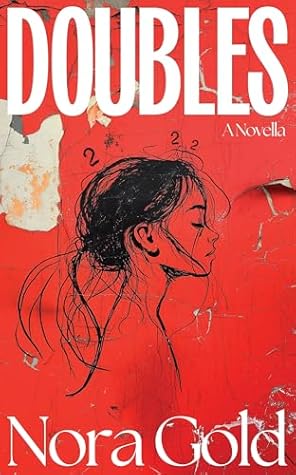
Nora Gold’s Doubles did exactly that.
At its core, Doubles follows a twelve-year-old girl living in an institution for troubled youth in 1968. She loves math. She’s intelligent, observant, and deeply sensitive. After the death of her mother, she is sent away by a father who seems unable—or unwilling—to understand her.
What struck me most is that at no point did she feel like a troubled child.
She felt like a child who had been failed.
Failed by grief.
Failed by adults.
Failed by a system that found it easier to institutionalize her than support her.
As I read, I kept thinking about how often children are labeled difficult when what they’re really experiencing is pain. We expect children to process loss, rejection, neurodivergence, and loneliness with tools they haven’t been given. Then we act surprised when they struggle.
The protagonist doesn’t suddenly become rebellious or delinquent for no reason. She adapts to the environment she’s placed in. She seeks connection where she can find it. She absorbs the behaviors around her. She becomes the product of a world that continuously tells her she is unwanted.
And honestly?
I was angry for her.
Not because she made perfect choices. Not because she was always easy to understand. But because she was twelve.
Twelve.
Her mother dies at thirty-one years old. She is left navigating puberty, grief, confusion, and abandonment inside an institution filled with people who often seem more interested in managing behavior than understanding the child behind it.
One of the details I found most heartbreaking was the way her journal entries seem to shrink as the story progresses.
At the same time, her internal world becomes larger.
Her body changes.
Her thoughts become darker.
Her anger grows.
Her loneliness deepens.
Everything happening inside her feels enormous, yet her voice on the page becomes smaller and smaller. It felt like watching someone disappear in real time.
Which brings me to the ending.
I hated it.
Not because it was poorly done.
Because I wanted more.
I wanted answers.
I wanted certainty.
I wanted someone to tell me she would be okay.
Instead, the story ends and leaves the reader sitting with uncertainty.
At first, I found that frustrating.
Then I realized that might be the point.
The ending almost forces the reader to do what society failed to do for her: care what happens next.
There is no tidy resolution.
No guarantee she escapes the damage.
No reassurance that someone finally sees her.
The reader is left carrying those questions long after the final page, and maybe that’s exactly where Gold wants us.
Because the real tragedy isn’t that this fictional child suffered.
The tragedy is how many real children have, and still are.
Doubles is short, but it stayed with me long after I finished it. Its exploration of grief, neurodivergence, institutionalization, and belonging feels just as relevant today as it would have in 1968.
Most of all, it reminded me that behind every “difficult” child is a story we may not fully understand.
Sometimes what looks like defiance is grief.
Sometimes what looks like rebellion is loneliness.
And sometimes what looks like a problem is simply a child begging to be seen.
 Vikki's Book Nook
Leave a comment